History
Timeline of key events
Saladaeng Field & the great fair
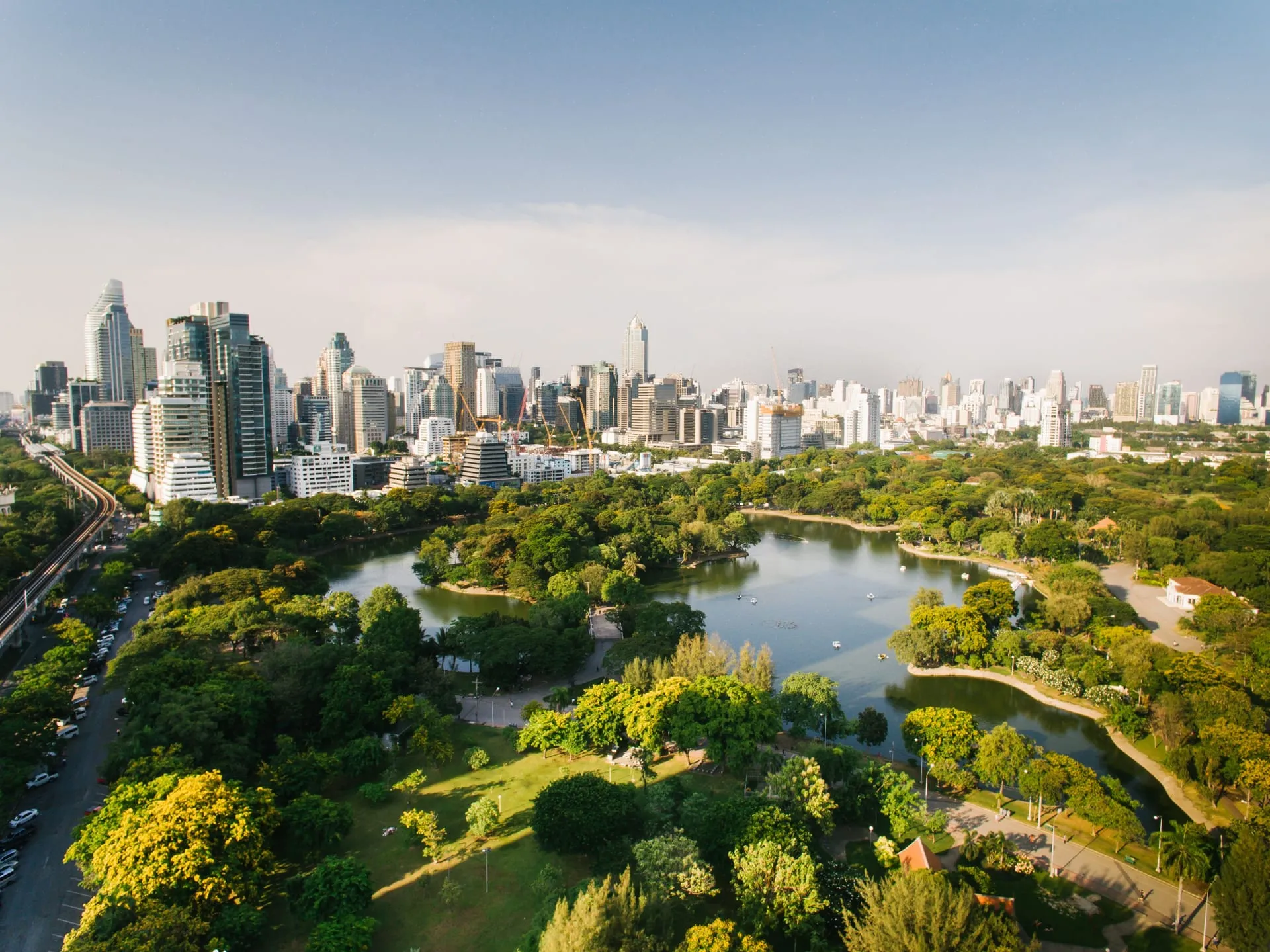
King Vajiravudh (Rama VI) granted the royal ‘Saladaeng Field’ to host the Siamrat Phiphitthaphan Trade Fair, an exhibition intended to showcase Siamese goods and industry, and named the grounds ‘Lumpini’ after Lumbini in Nepal, the birthplace of the Buddha. The fair was cancelled after the King's death in November 1925. In the reign of King Prajadhipok (Rama VII), part of the grounds was leased out for an amusement park, which opened on 7 November 1929. The Chinese-style clock tower built for the fair is still one of the park’s oldest landmarks.
WWII camp & monument
During World War II, the Japanese army used the park as a military camp. In 1942, the statue of King Rama VI was put up at the main entrance to mark the park’s royal beginnings.
Birth of the Lumpinee Stadium
The park gave its name to the Lumpinee Boxing Stadium, which opened on 8 December 1956 on Rama IV Road outside the gates. Owned by the Royal Thai Army, it became one of Muay Thai's best-known venues, and a Lumpinee title became the goal of young fighters. The original arena hosted matches for almost sixty years before moving to Ram Inthra Road in 2014, but the name Lumpinee is still linked to the sport.
Music, reading & the floating restaurant
The Lumpini Public Library opened in 1956 as Bangkok's first public library, and the park later gained the Lumpini Recreation Centre for sports. On the main lake, the Kinnari Nava floating restaurant, with a kinnari figurehead (a half-woman, half-bird figure from mythology), operated from 1961 until it closed after a fire in 1971. The Bangkok Symphony Orchestra (now the Royal Bangkok Symphony Orchestra, founded 1982) later began the free Concert in the Park series on winter Sundays.
A census of the prehistoric residents
By the mid-2010s, the park had around 400 monitor lizards. In 2016, park staff moved more than 200 of them to a wildlife breeding centre in Ratchaburi province to keep the population under control. International news outlets reported the round-up, and the lizards are still the park’s unofficial mascots.
Renovations & resiliency
For the park’s 100th anniversary in 2025, the Bangkok Metropolitan Administration (BMA) carried out a series of upgrades: a new link to the Green Bridge, a dog park, the Gate 5 hawker centre, renovated playgrounds and exercise areas, and a restored library, Chinese pavilion and clock tower. The 1.6 km Green Bridge, the elevated walkway to Benjakitti Park, reopened on 1 May 2026 (full route opened for trial use; a first section opened on 30 November 2025).
FAQ: History
Find answers about the landmarks, origins, and key events in Lumpini Park's history.
Why is it named Lumpini Park?
The park is named after Lumbini, the birthplace of the Buddha in Nepal. King Rama VI granted the royal Saladaeng Field in 1925 and gave the park its name. After his death in November 1925 the planned fair was cancelled; in the reign of his successor, King Rama VII, part of the grounds was leased out for an amusement park, which opened on 7 November 1929.
What was Lumpini Park used for during World War II?
During World War II, the Japanese army used the park as a military camp. The statue of King Rama VI was built at the entrance in 1942, during the war.
Was the original Lumpinee Boxing Stadium located inside the park?
No, the Lumpinee Boxing Stadium was never inside the park gates. It opened in 1956 on Rama IV Road, just outside the park. The stadium took its name from the park and hosted fights there for nearly sixty years before moving to Ram Inthra Road in 2014.
What is the oldest structure still standing in Lumpini Park?
The Chinese-style clock tower is one of the oldest: it was built in 1925 as the grounds were prepared for the planned trade fair. It stands near the southeast corner of the park by Gate 2 and was restored for the park's centenary.
What renovations are happening for the park's 100th anniversary?
The park turned 100 in 2025. For the centenary, the BMA built a new link to the Green Bridge, a dog park and the Gate 5 hawker centre, renovated playgrounds and exercise areas, and restored the library, Chinese pavilion and clock tower. The Green Bridge to Benjakitti Park has reopened. Centennial events were held 25–30 April 2026, marking the park's 100 years alongside the 100th anniversary of King Rama VI's passing.